Page 9 - Austin Rare Coins Blog
- Posted: August 20, 2022
 Read more »
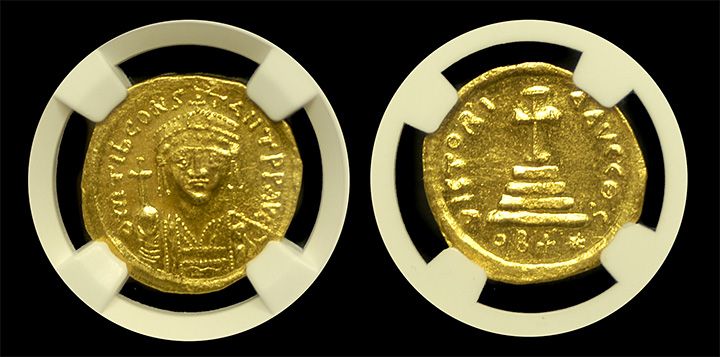
As far as the history of rulers of the Byzantine Empire, Tiberius II was a good emperor. Tiberius II ruled as an Eastern Roman emperor from 574 to 582. He ruled Byzantine Empire under the Justinian dynasty and proved himself to be a capable administrator that was well loved by his people.
During the Justinian Dynasty Tiberius II rose to power in 574 when Justin II started to have a mental breakdown. Justin the II had adopted Tiberius as his own son and proclaimed him Caesar. In fact, in 578 the dying Justin II gave Tiberius the title of Augustus and becoming co-emperor alongside him. Tiberius became sole ruler less than two weeks later. Subsequently, Tiberius took the regnal name of "Constantine" under which he reigned until his death.
- Posted: August 13, 2022Categories: Rare World Coins
 Read more »
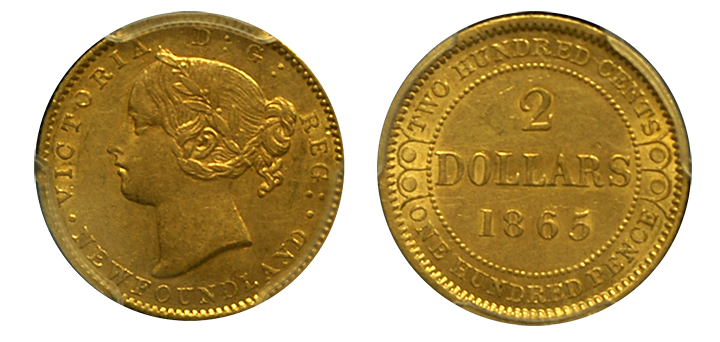
Many people today are not aware that Newfoundland was independent and its own Dominion. Today, Newfoundland is the last province of Canada. This means it was the 10th and last province added. However, it was formerly known as the Newfoundland Colony. It wasn't until after World War II that it became a province of Canada. In fact, on March 31, 1949, it was easternmost, the tenth, and last province to be added to Canada.
Before it became a Canadian province, Newfoundland was called the "Dominion of Newfoundland." Back in 1907 Newfoundland along with its neighbor Labrador enjoyed the constitutional status like other dominions of the time. This was confirmed by the Balfour Declaration of 1926 along with the Statute of Westminster of 1931.
Newfoundland's independence only survived for 79 years. This was because of severe economic hardship
- Posted: August 06, 2022
 Read more »
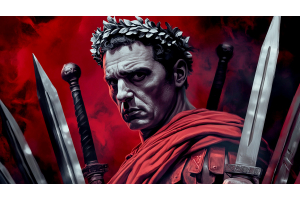
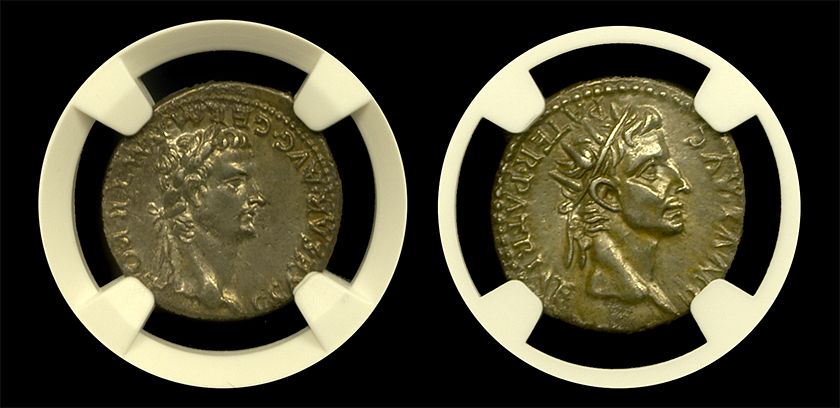
Roman Emperor Caligula is remembered as being the cruelest roman emperor. No one can say exactly why he was so cruel. Some speculate, that it was because he fell ill of syphilis 6 month into his reign. Whatever the reason, he never recovered mentally and became a ruthless leader.
Caligula's cruelty lasted during his four-year reign from 37-41 AD. In fact, he became so ruthless that no one was safe, including his family. Some even refer to Caligula as the mad emperor. In short, his cruelty, sadism, extravagance, and sexual perversion was nothing short of the actions of an insane tyrant. For instance, he made his horse a member of the senate and slept with or killed every member of his own family.
There are others who believe Caligula's excessive cruelty is exaggerated - Posted: July 29, 2022
 Read more »
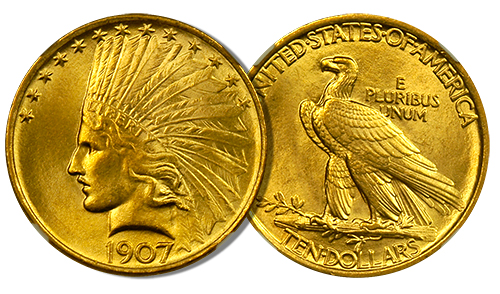
US President Theodore Roosevelt was tired of minting the same old gold eagle and double eagle coins. To paraphrase President Roosevelt, the country needed a US gold coin redesign. In short, he had long been complaining that US coins lacked artistic quality. In fact, he decided to hire a private sculptor to create a new design. Augustus Saint-Gaudens was chosen to redesign five denominations of US coinage that could be changed without an Act of Congress.
Roosevelt's broad overhaul of the United States gold coins led to a new Lady Liberty. One wearing a traditional Native American Indian Headdress. In 1907, the new $10 coin with the new Lady Liberty wearing the Indian Headdress was unveiled. The coin became a huge success.
- Posted: July 25, 2022
 Read more »
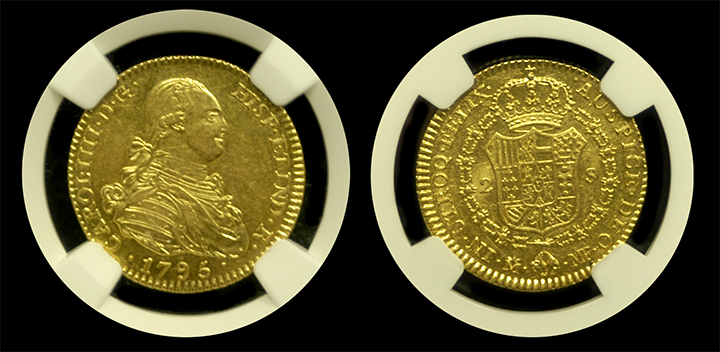
A common question we get is "What is a Spanish Escudo coin?" The Escudo was and is Spanish currency. Escudos comes in both gold and silver. Interestingly, the first Escudo gold coins were introduced in 1535/1537. They were issued in denominations of 1⁄2, 1, 2, 4 and 8 Escudos. In addition, the 2 Escudos coins were commonly known as Doubloons and worth 16 reales.
Gold Escudos were issued until 1833. They are beautiful coins with great attention to detail. As a result, these gold coins from Spain in the 1790’s have remarkable eye appeal. Today's coin collectors and investors
- Posted: July 22, 2022
 Read more »
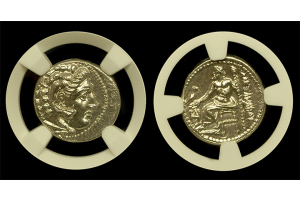
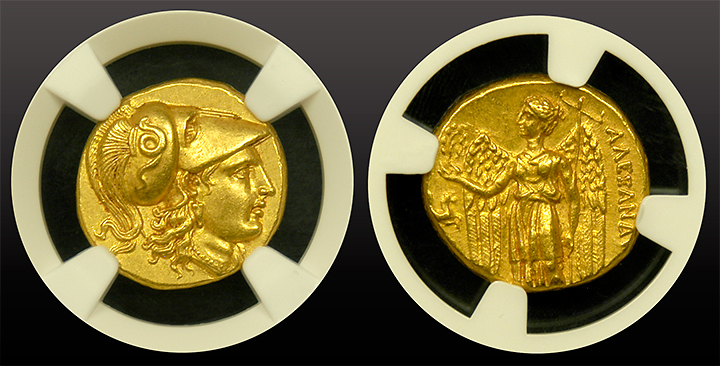
The world’s first coins were minted in ancient Lydia. Lydia's King Croesus became the first ruler to separate gold from other metals. He issued the world's first pure gold and pure silver coins. The Persian Empire, also known as the Achaemenid Empire, took up the idea of coinage upon defeating King Croesus in 547 B.C. However, it wasn't until Alexander the Great of the Macedonian Empire, who conquered the Persian Empire, that the first international currency evolved. In fact, some believe that Alexander was the father of the first international currency.
Alexander ascended to the throne in 336 BC following the assassination of his father Philip II. He became king at the very young age of 20. In addition, Alexander adopted the Attic coinage standard. Unfortunately, Alexander spent his ruling years conducting lengthy military campaigns and really didn't get to enjoy his conquest much. He was always too busy conquering more lands throughout Western Asia and Egypt. - Posted: July 22, 2022
 Read more »
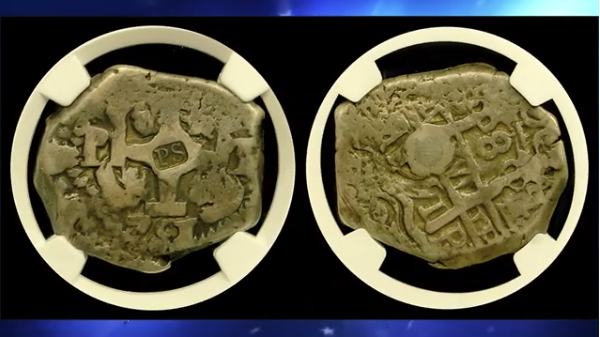
We are absolutely thrilled to share a very rare Countermarked Silver Cobb 8 Reales coin with you today. In fact, up to this point in time very few people knew coins like this even existed. This coin isn't even known to many historians or the rare coin industry alike. It is quite literally the oldest known official United States Silver Dollar. In particular, it is the only one in private hands with the countermark of PS.
It’s an absolute wonderful find and a priceless piece of American History. Surprisingly, not many people knew how business was done before the US Mint opened. From the 1600's up to 1792 Spanish colonial silver Reales and gold Escudos were the primary currency used in the colonies. Of course, this changed once the US started minting their own coins.
US regulators confiscate countermark Spanish coins
- Posted: July 12, 2022
 Read more »
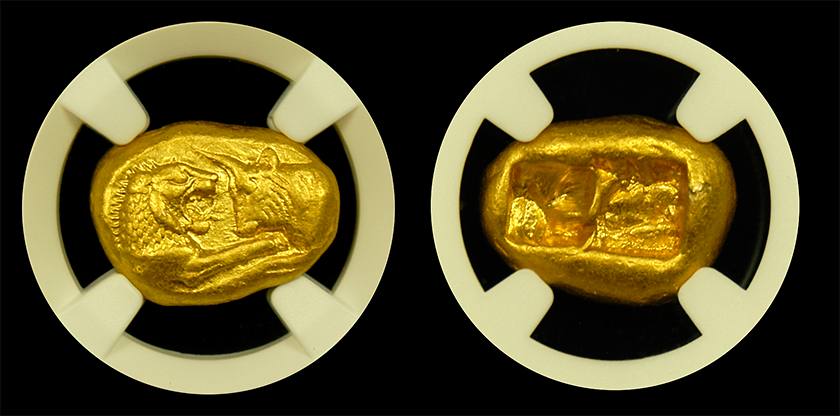
King Croesus renowned wealth became synonymous with his own name. The saying "rich as Croesus" originated in reference to his absurd affluence. Subsequently, Croesus reign became associated with the invention of coins as currency. Before Croesus became King, his father Alyattes had already started to mint various types of non-standardized coins. However, Croesus took it one step further. By developing an innovative refining process and standardizing the specific sizes as well as the purity for general circulation, King Croesus advanced both silver and gold.
In other words, Croesus created intrinsic value deriving from a certain quantity of gold or
- Posted: June 03, 2022
 Read more »
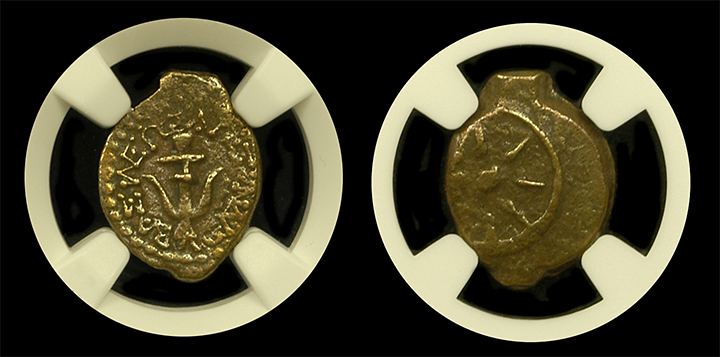
New Testament has reference to Biblical-Era Judean Bronze Prutahs coins. These coins had a more common name due to a very well known biblical story.
42 And there came a certain poor widow, and she threw in two mites, which make a farthing.44 For all they did cast in of their abundance; but she of her want did cast in all that she had, even all her living.
- Posted: May 13, 2022
 Read more »
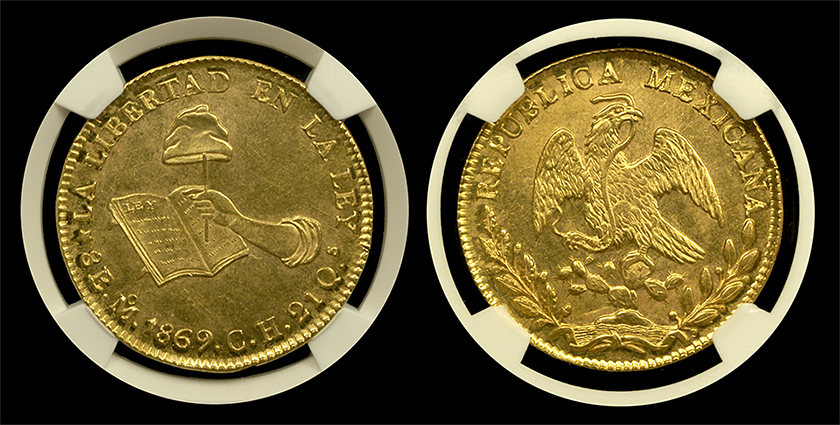
Mexico first declared Independence from Spain in 1810. To clarify, this happened on September 16th, 1810. Before then this area was more commonly referred to as New Spain. The declaration of Independence led to a 11 year war against Spain. Unfortunately, it wasn't until August 24, 1821 that Spain finally recognized Mexico's Independence.
This was the dawn of the once New Spain turning into the new Mexican Empire. Gone were the days of the Spanish Catholic monarchy. A new federal republic was finally declare and by 1924 they codified Mexico's new Constitution. It is important to note, there were some reattempts by Spain to re-concur New Spain. However, by 1836 Isabella II and Spain finally fully recognized Mexico's independence.